How Many Pinterest Boards Should an Etsy Seller Have?
Find out how many Pinterest boards Etsy sellers need and which types drive the most traffic. Board naming, descriptions, and organization tips included.
How Many Pinterest Boards Should an Etsy Seller Have?
Your Pinterest boards are not just folders for your pins. They are search signals, category labels, and the organizational backbone of your entire Pinterest strategy. Get them right and your pins surface in more searches. Get them wrong and even great pin designs get buried.
So how many boards do you actually need?
The Sweet Spot: 8-15 Active Boards
For most Etsy sellers, 8 to 15 boards provides enough variety to cover your product range and niche topics without spreading your content too thin.
Fewer than 8 and you likely do not have enough topical coverage to capture the range of searches your ideal customers are making. More than 20 and you start diluting your pinning frequency across too many boards, which means each board gets updated so rarely that Pinterest stops showing it to people.
The key word here is active. Every board on your profile should receive at least a few new pins per month. A board with 5 pins that has not been updated in six months is dead weight.
The Five Types of Boards Every Etsy Seller Needs
1. Product-Specific Boards
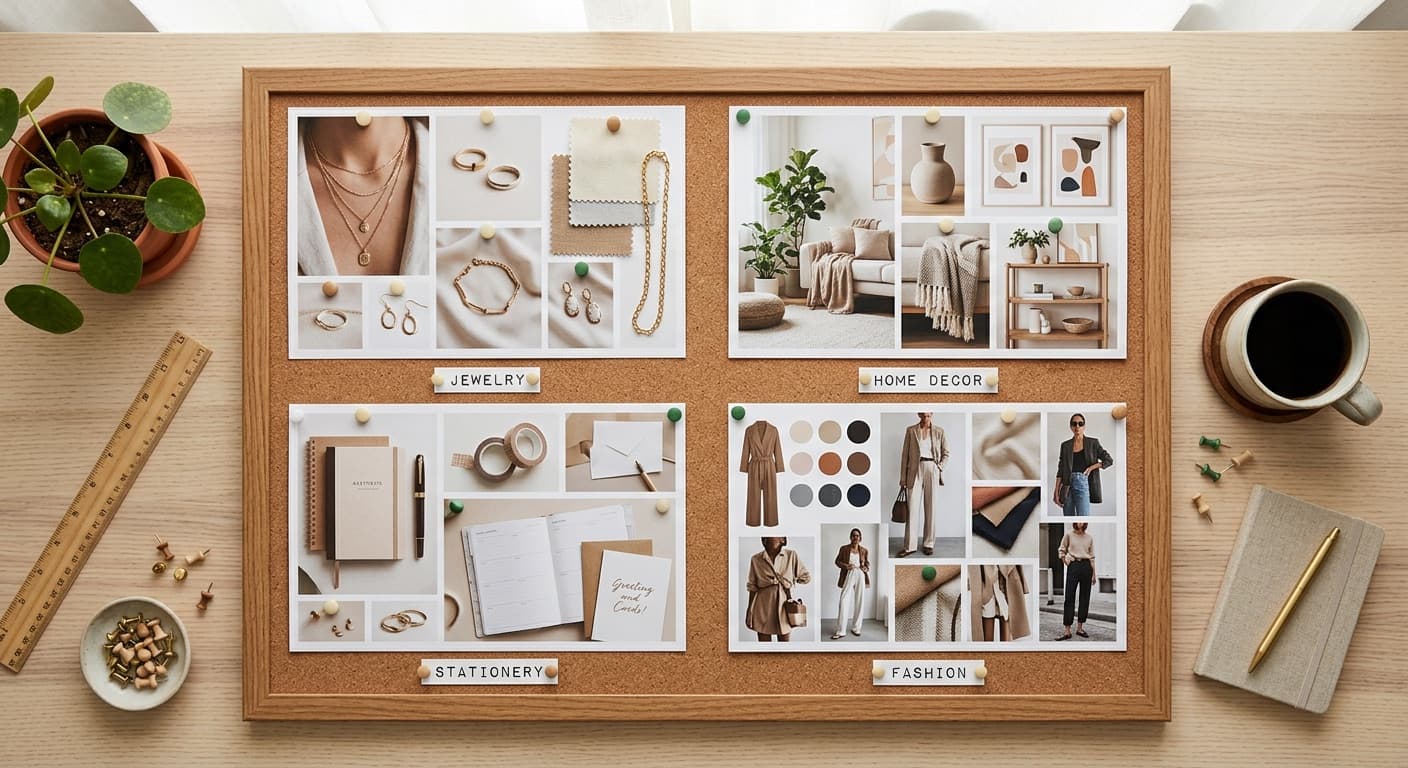
These boards showcase your actual products, organized by category. If you sell handmade candles, you might have boards for "Soy Candles," "Seasonal Candles," and "Candle Gift Sets."
Naming tip: Use the words your customers would search for. "Handmade Soy Candles for Home" beats "My Candle Collection" every time.
2. Niche Lifestyle Boards
These boards put your products in context. They cover the lifestyle, aesthetic, or use case your customers care about. A jewelry seller might have a board called "Minimalist Everyday Style" or "Wedding Day Accessories."
Lifestyle boards attract a broader audience who may not be searching for your specific product but are browsing related topics. They discover your product pins alongside the curated content, and that is how you earn new followers and clicks.
3. Seasonal and Holiday Boards
Seasonal boards let you capitalize on Pinterest's strongest traffic drivers. Depending on your product type, consider boards like:
- "Christmas Gift Ideas for Her"
- "Spring Home Refresh"
- "Valentine's Day Gifts Under $50"
- "Back to School Essentials"
These boards can stay active year-round since Pinterest users search for holiday content months in advance. Pin to them consistently, and they will be well-established by the time seasonal traffic peaks.
4. How-To and Inspiration Boards
Educational content performs extremely well on Pinterest. Think "How to Style a Gallery Wall," "DIY Gift Wrapping Ideas," or "Jewelry Care Tips." These boards position you as an expert in your niche while driving traffic to blog posts or product listings that answer the question.
5. Behind-the-Scenes or Brand Story Boards
A single board dedicated to your process, workspace, or brand story adds personality to your profile. Pins showing your studio, raw materials, work in progress, or packaging resonate with the handmade community on Pinterest. One board is enough -- you do not need three.
How to Name Your Boards for Maximum Discoverability
Board names are searchable. Pinterest uses them to understand what your board is about and which searches it should appear in.
Do this:
- Use descriptive, keyword-rich names: "Personalized Gifts for Dog Lovers"
- Include the product type when relevant: "Handmade Ceramic Mugs"
- Think about what your customer would type into Pinterest search
Avoid this:
- Cute but vague names: "Pretty Things," "Inspo," "Love These"
- Your brand name only: "Sarah's Picks" tells Pinterest nothing about the content
- Names that are too broad: "Gifts" competes with millions of boards. "Unique Gifts for Book Lovers" is specific enough to rank.
Writing Board Descriptions That Work
Every board gets a description field, and too many sellers leave it blank. That is a missed opportunity. Board descriptions give Pinterest additional context for ranking your content in search results.
Write 2-3 sentences that naturally include the keywords your customers search for. You are not writing for humans here as much as for the algorithm, but it should still read like a coherent sentence.
Example for a board called "Minimalist Gold Jewelry":
"Minimal gold jewelry for everyday wear. Delicate gold necklaces, simple gold rings, and dainty gold bracelets perfect for layering. Handmade fine jewelry that goes with everything."
Notice how naturally the keywords "gold jewelry," "gold necklaces," "gold rings," "gold bracelets," and "handmade fine jewelry" fit into those three sentences.
Common Board Mistakes
Too many boards with too few pins. A board with 3 pins looks abandoned. Do not create a board until you have at least 10 pins ready for it. Aim for 30+ pins per board over time.
Duplicate or overlapping boards. If you have "Summer Dresses," "Sundresses," and "Casual Summer Style" and they all contain the same pins, consolidate. Pinterest does not reward you for having more boards -- it rewards you for having relevant, active boards.
Irrelevant personal boards. Your business Pinterest account should not have a "Recipes I Want to Try" board alongside your product boards. If you want to save personal content, use a separate personal account or make those boards secret.
Never archiving or cleaning up. If you discontinued a product line, archive the board. If a board has not received a new pin in 6 months and you have no plans for it, archive it. Archived boards do not show on your profile but their pins can still appear in search.
When to Archive vs. Delete
Archive when the content is still valid but you are not actively adding to the board. Archived pins remain searchable and can still drive traffic. This is the right move for seasonal boards during the off-season or product lines you have paused.
Delete only when the content is completely irrelevant or misleading -- for example, a board of products you no longer sell and links that go to dead pages. Even then, archiving is usually the safer choice.
Building Your Board Strategy
Start with this exercise: list every product category you sell, every use case for your products, and every topic your ideal customer cares about that relates to your niche. That list will naturally suggest 10-15 board ideas.
Create the boards, write descriptions, and commit to pinning to each one at least twice a week. Within 90 days you will see which boards gain traction and which need rethinking.
Need help organizing your Pinterest boards and scheduling content across them? PetalBoard gives you a visual calendar with board management built in, so you can see exactly where each pin is going and keep every board active without the guesswork.